
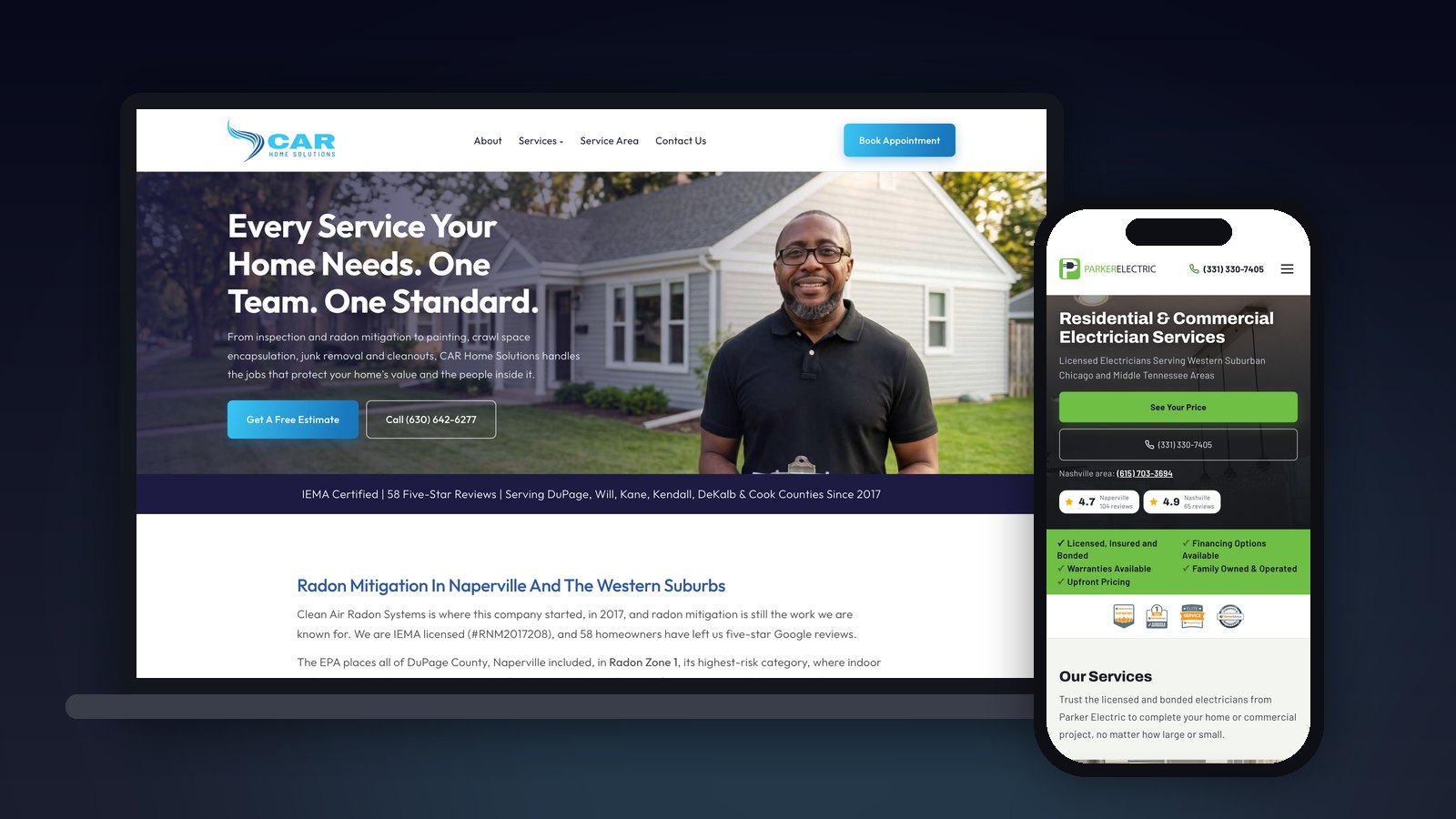
A homeowner looking for a builder, remodeler or tile contractor does the same thing every time. They search on a phone, open three or four sites, and call the one that looks like it does good work nearby and is easy to reach. Your website has a few seconds to pass that test. Here is what it takes, from a studio that has built sites for contractors around Roswell and Marietta for years, including four for Stone & Tile Design in Roswell.
1. Show the work, with real photos
Nothing sells construction like finished projects. Stock photos of smiling workers do the opposite: homeowners can spot them, and they make a real company look like a template. Build a project gallery from your own jobs, grouped the way customers think (kitchens, baths, decks, commercial), with a line on each: the town, what you did, and how long it took.
- Before and after pairs are the strongest thing you can show.
- Name the town on every project. A Roswell homeowner wants to see Roswell jobs.
- Phone photos are fine if they are sharp and well lit. Consistency beats perfection.
2. Put the quote button on the first screen
Most of your visitors are on a phone. If the call button and the quote form sit three screens down, a share of them leave before they find it. Every contractor site we build has a tap-to-call button and a short quote form on the first screen of a phone: name, phone, the town, and what the job is. Short forms get filled in. Long ones get abandoned.
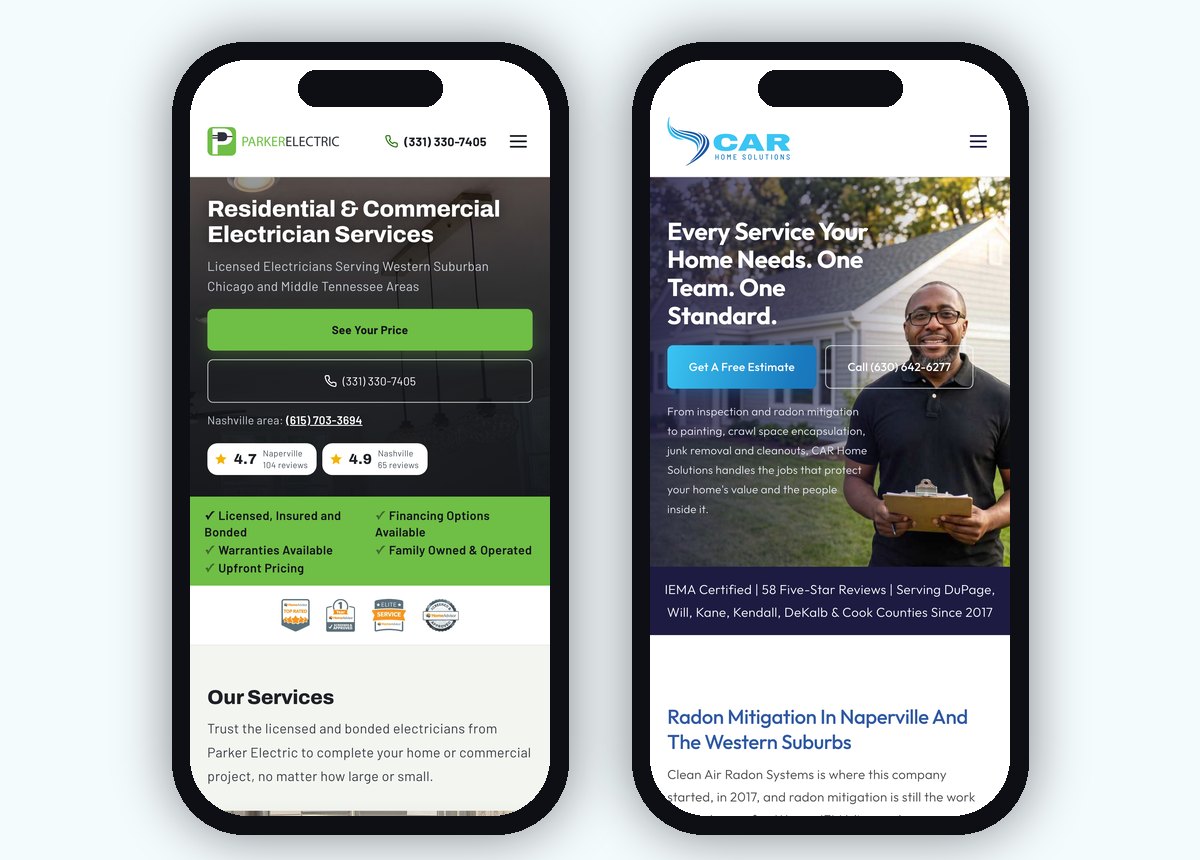
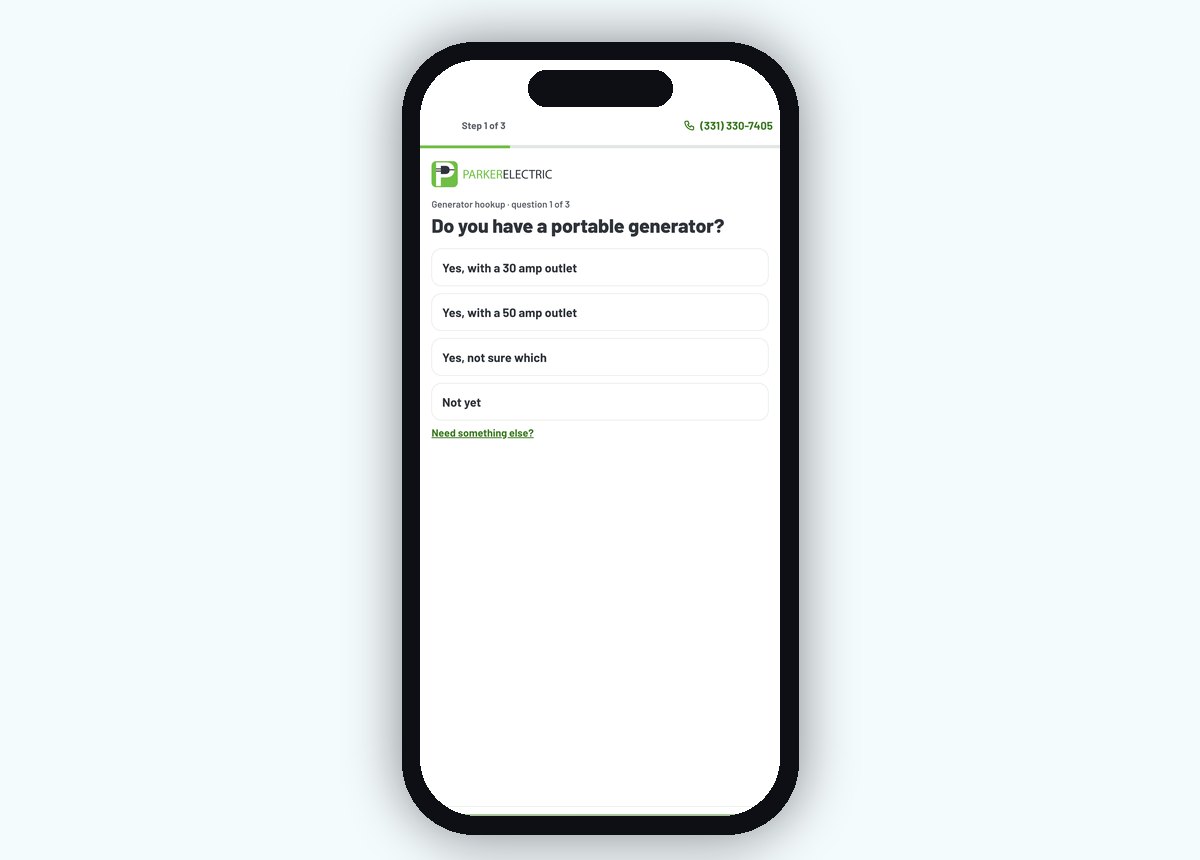
Some trades can go a step further and show a price online. We built Parker Electric a quote page where customers pick the job, see the price and book a time without a phone call. Not every job can be priced that way, but if some of yours can, a visible price filters out tire-kickers and books the serious ones.
3. A page for each service and each area you work
Google ranks pages, not companies. One page that says "we do everything everywhere" ranks for nothing. A contractor site needs a page for each main service (kitchen remodeling, decks, tile installation) and a page for each town or county you want work from, written about that place, not the same text with the city swapped.
4. Proof: license, insurance, reviews
Homeowners worry about hiring the wrong contractor more than almost any other purchase. Answer the worry before they ask:
- Your license number and "licensed and insured" near the top of the page.
- Your Google reviews on the site, with the reviewer's name and town.
- How long you have been in business and who will actually be on the job.
- Warranties and how you handle a problem after the job.
5. Fast on a phone, found on Google
A construction site is heavy with photos, which makes it slow if it is built carelessly. Compress every image, size it for phones, and check the site with Google's PageSpeed Insights. Then match your Google Business Profile to the site: the same phone number, hours, services and service area. A mismatch confuses Google and costs you map rankings.
6. Know which calls came from the site
If you cannot tell which calls and forms came from the website, you cannot tell whether it is working. Call tracking numbers and form tracking show you exactly how many leads the site produced each month and where they came from, so you can spend on what works.
What it costs
Our contractor websites are $2,500 to build, then $50 a month for hosting, security and unlimited small changes. If you want more of the right customers finding you on Google, Website + organic growth is $250 a month with SEO done for you every month. Month to month, no contract. See your price or book a 20-minute meeting.